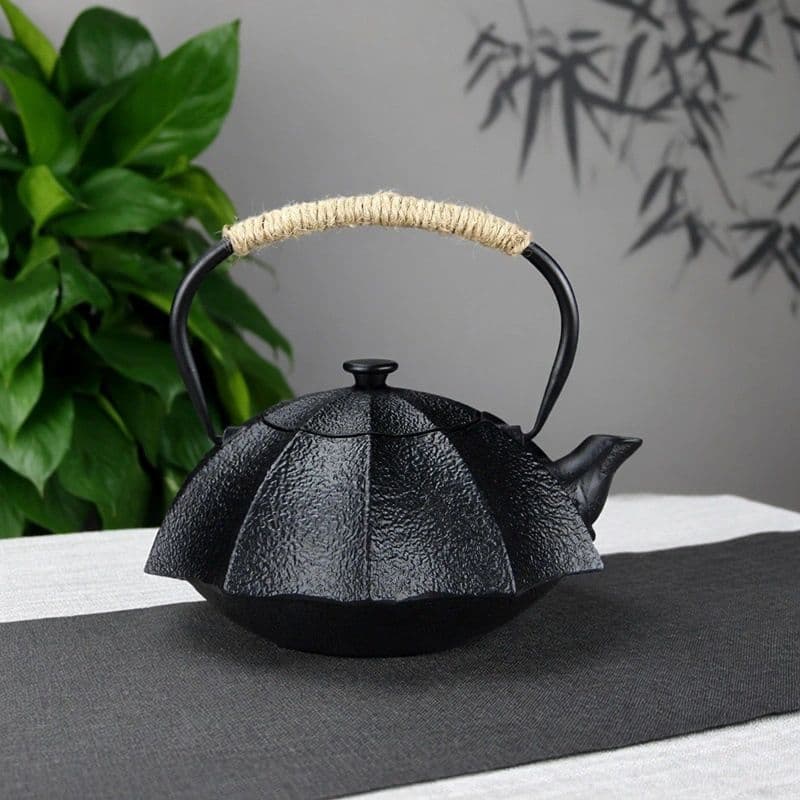
Guide · 2 min read
Cast Iron Care: How to Season Your Tetsubin for a Lifetime of Use
Three steps, twice a year, ten minutes each — that's all it takes to keep a cast iron teapot in daily use for decades.

A common worry about cast iron is rust. The good news: a properly cared-for tetsubin will not rust , because the inside is enamel-lined. But the enamel can wear at the rim, and the outside benefits from a periodic oil rub. Here is the whole routine.
The 30-second after-each-use routine
Empty the pot — do not leave tea sitting overnight.
Rinse with warm water only . No soap. Soap strips the patina on the outside and any seasoning you have built up.
Turn upside down on a wooden trivet or cloth to air-dry completely.
That is it. Ninety-nine percent of cast iron problems come from skipping one of those three steps.
The twice-a-year deep care
Every six months — or whenever the outside of the pot looks dry:
Warm the empty pot on the stove over low heat for 2 minutes.
Rub a teaspoon of camellia oil (or food-grade mineral oil) over the outside with a soft cloth. Pay extra attention to the rim and the spout.
Buff dry. The pot will look slightly darker than before — that is the new patina.
Do not use olive oil or vegetable oil on cast iron. They go rancid. Camellia oil is the traditional Japanese choice and what we recommend. We stock it in the UK through our sister brand — contact us for a recommendation.
What to do if you see rust
If the inside (enamel) chips or the outside rusts:
Outside rust. Scrub gently with a soft brush and water, dry thoroughly, oil, and continue using. Cosmetic only.
Inside chip. Stop using immediately and contact us — enamel chips are rare but we replace any pot that develops one within the first year.
When to retire a tetsubin
Never. A tetsubin is one of the few kitchen objects designed to be inherited . With basic care, your pot will outlast you.
Browse our complete care guide PDF or the cast iron teapot collection .
Shop the products mentioned
Monami Workshop
London finishing studio